
Understanding the parts of a car with names helps readers know how a vehicle works and how each section supports safe driving. A car is made of many internal and external components that work together smoothly. From the engine that powers the vehicle to the smallest safety feature, every part has a clear purpose. Learning the names of car parts also makes repairs, maintenance, and discussions easier. This article on different car components and their names is written in simple language for quick understanding. It is helpful for students, beginners, and anyone curious about cars.
Table of Contents
ToggleParts of Car with Names list
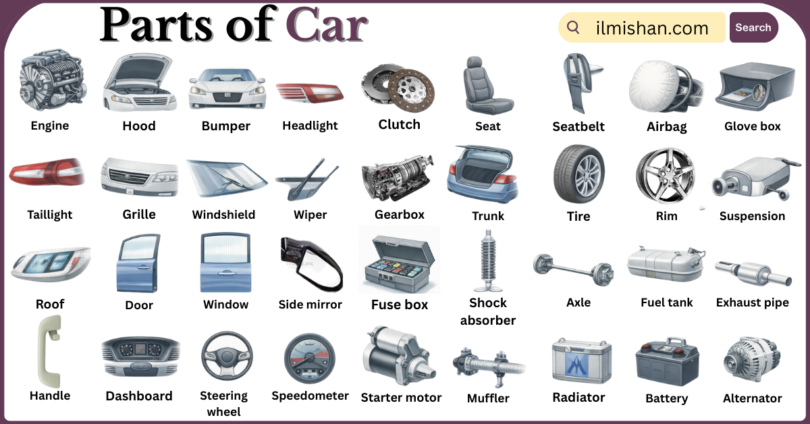
- Engine
- Hood
- Bumper
- Headlight
- Taillight
- Grille
- Windshield
- Wiper
- Roof
- Door
- Window
- Side mirror
- Handle
- Dashboard
- Steering wheel
- Speedometer
- Gearbox
- Clutch
- Brake pedal
- Accelerator
Common Parts of Car with their Names and Pictures
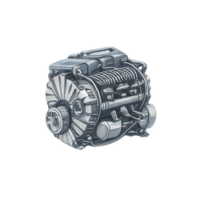
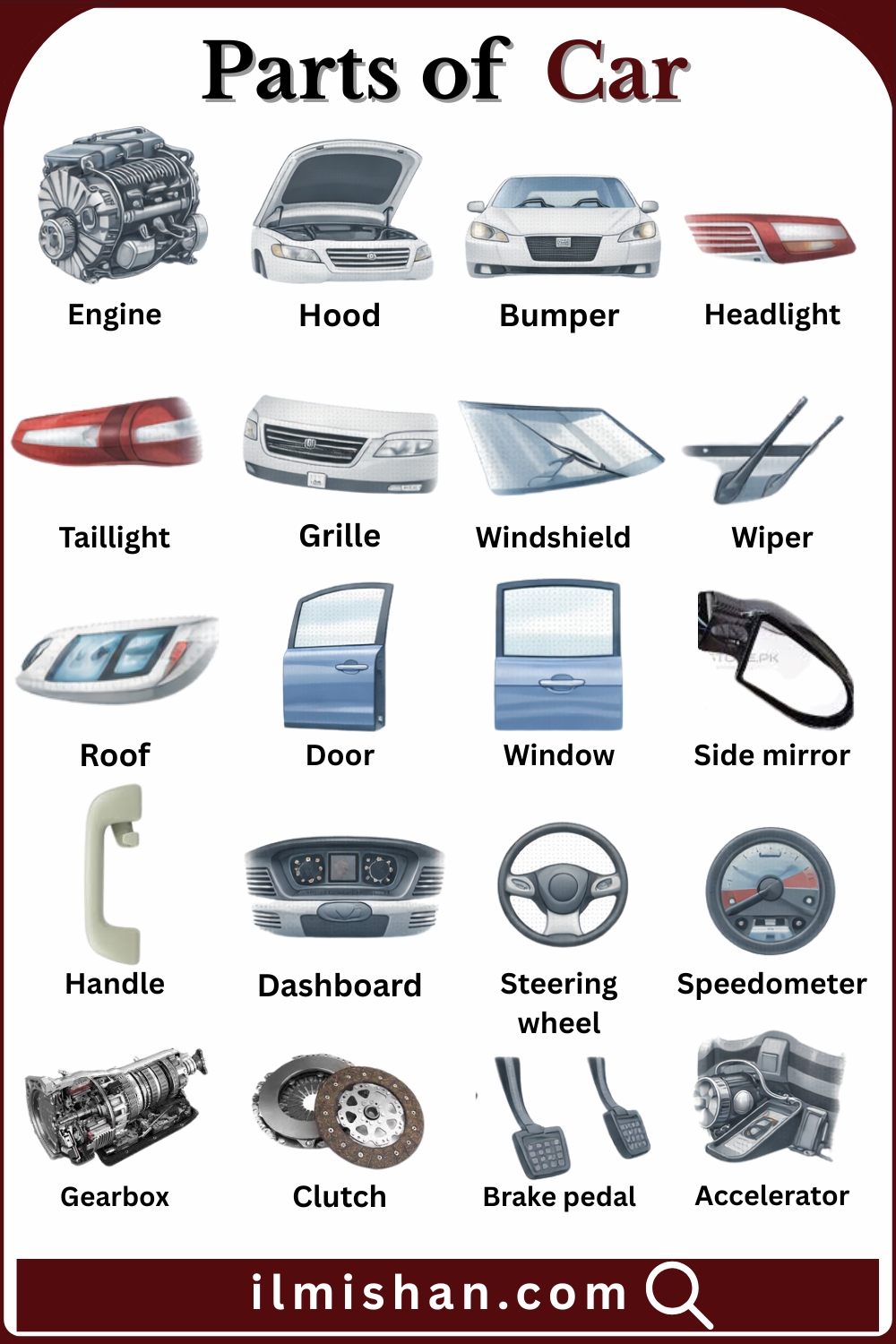
- Engine
Main mechanical unit that converts fuel into power, driving the car forward by turning wheels and supporting vehicle movement, performance, and overall operation, reliability, efficiency, durability, safety, control, balance, longevity.
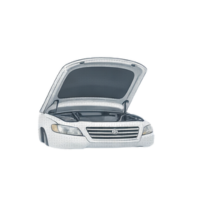
- Hood
Protective metal cover over the engine that opens for maintenance, shields components from weather, heat, and debris, and improves aerodynamics, safety, appearance, durability, alignment, insulation, strength, balance.
- Bumper
Protective structure at the front or rear that absorbs impact during minor collisions, reducing damage to the car body, lights, and passengers, improving safety, durability, protection, stability, compliance.

- Headlight
Front-mounted light that illuminates the road ahead during darkness or poor visibility, helping drivers see clearly, avoid obstacles, and drive safely at night, ensuring visibility, focus, accuracy, control.
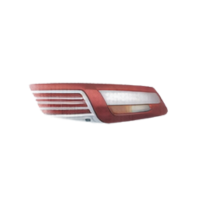
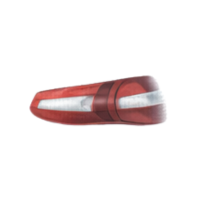
- Taillight
Rear light that signals braking, turning, and presence to vehicles behind, improving visibility, communication, and safety during night driving or low-visibility conditions, reducing collision risks, awareness, response, compliance.
- Grille
Front opening that allows airflow to cool the engine and radiator, while protecting internal components and adding a distinctive style to the car’s exterior design, durability, ventilation, balance, efficiency, aesthetics.
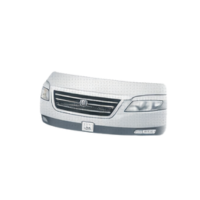
- Windshield
Front glass panel that protects occupants from wind, dust, and debris while providing clear visibility and structural support to the vehicle’s cabin, improving safety, clarity, strength, stability, protection, comfort.

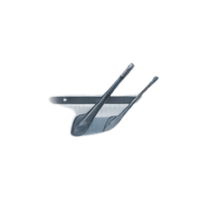
- Wiper
Mechanical arm with rubber blade that clears rain, dust, and debris from the windshield, maintaining clear vision for safe driving during bad weather conditions, enhancing visibility, reliability, control, consistency, performance.
- Roof
Top structure of the car that covers and protects passengers from weather, adds strength to the body, and supports safety systems, aerodynamics, comfort, insulation, durability, balance, protection, stability.

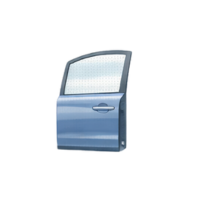
- Door
Movable panel that allows entry and exit for passengers, providing security, protection, and access to the vehicle interior while supporting windows, locks, and safety features, comfort, durability, alignment, usability.
- Window
Glass panel in doors or body that allows light, visibility, and ventilation while protecting passengers from wind, rain, and noise during travel, improving comfort, clarity, insulation, safety, convenience, control.

- Side mirror
Exterior mirror mounted on doors that helps drivers view traffic behind and beside the car, improving awareness, lane changes, parking, and overall driving safety, visibility, accuracy, confidence, judgment, control.

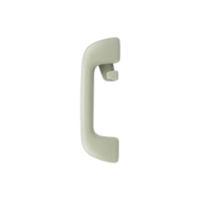
- Handle
Gripping mechanism on doors that allows opening and closing securely, providing convenient access to the vehicle while supporting locks and safety systems, durability, usability, comfort, alignment, reliability, protection.
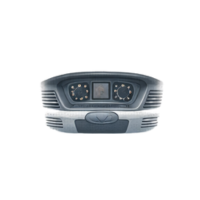
- Dashboard
Control panel in front of the driver that holds instruments, indicators, and controls, providing information about speed, fuel, warnings, and vehicle status, improving awareness, safety, organization, usability, clarity.
- Steering wheel
Circular control used to guide the car’s direction by turning the front wheels, allowing precise handling, maneuvering, and control while driving, ensuring safety, responsiveness, comfort, stability, accuracy, confidence.

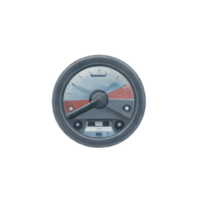
- Speedometer
Instrument that displays the vehicle’s current speed, helping drivers follow speed limits, drive safely, and maintain proper control on roads, supporting awareness, compliance, accuracy, judgment, monitoring, consistency, responsibility.
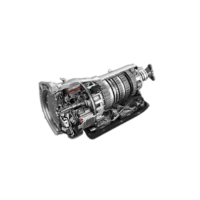
- Gearbox
Mechanical system that transfers engine power to wheels by changing gear ratios, allowing efficient speed control, torque adjustment, and smooth driving performance, improving efficiency, durability, responsiveness, balance, control, reliability.
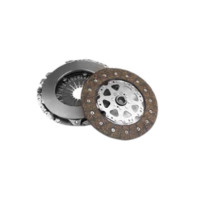
- Clutch
Mechanical device that connects or disconnects engine power from the gearbox, allowing smooth gear changes and controlled vehicle movement, improving driving comfort, precision, durability, responsiveness, balance, efficiency, safety, control.
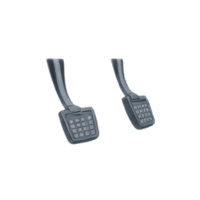
- Brake pedal
Foot-operated control that activates the braking system to slow down or stop the car, ensuring safety, control, and quick response during driving situations, reducing accidents, improving stability, reliability, confidence, protection.
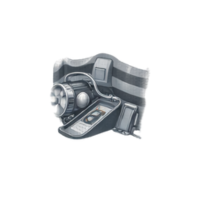
- Accelerator
Foot pedal that controls engine power by increasing fuel flow, allowing the car to speed up smoothly and efficiently during driving, improving responsiveness, control, performance, balance, efficiency, precision, confidence.
Common Parts of Car with their Names and Pictures
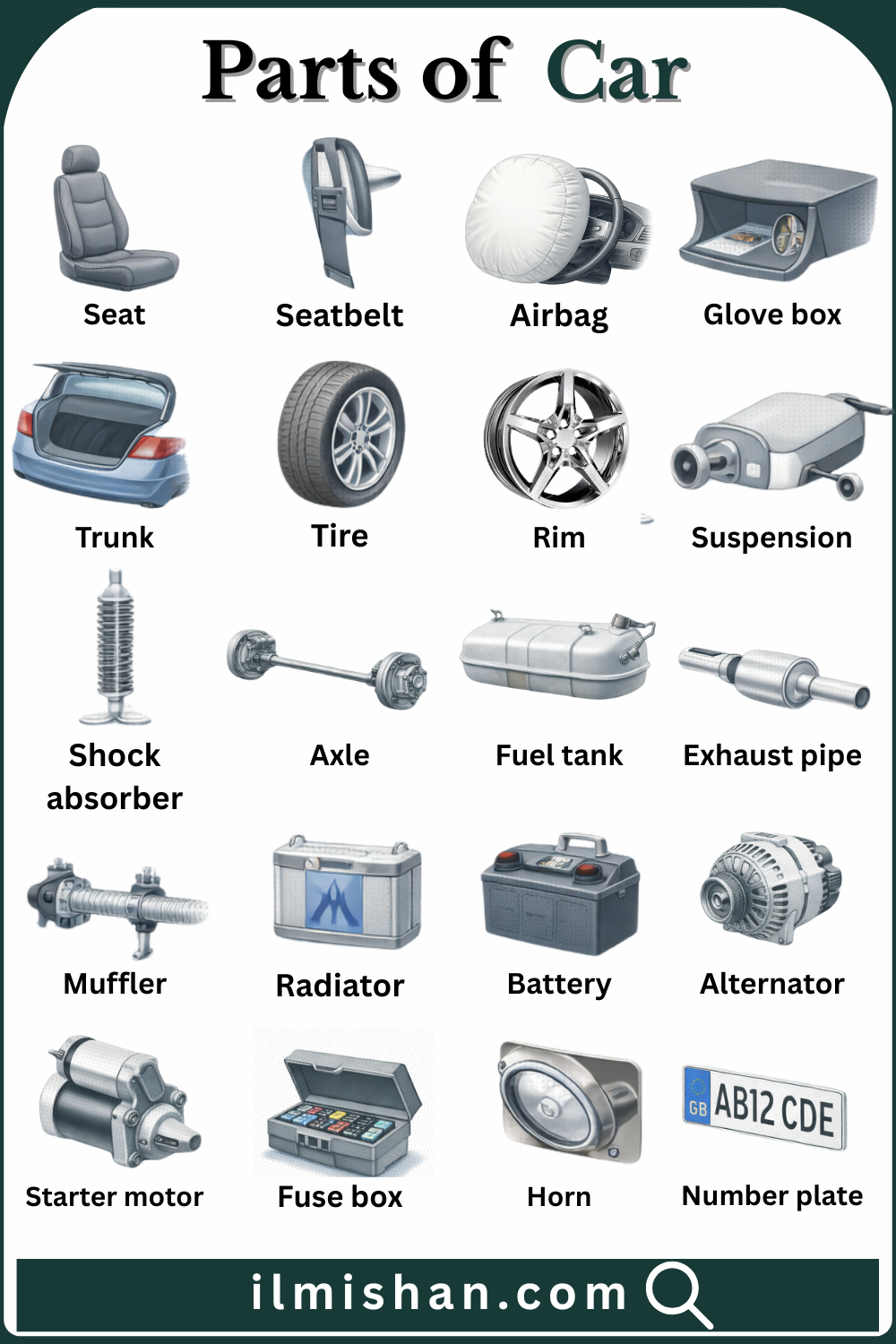
Common Car parts and Name
- Seat
- Seatbelt
- Airbag
- Glove box
- Trunk
- Tire
- Rim
- Suspension
- Shock absorber
- Axle
- Fuel tank
- Exhaust pipe
- Muffler
- Radiator
- Battery
- Alternator
- Starter motor
- Fuse box
- Horn
- Number plate
Explore Car Parts with Names and images
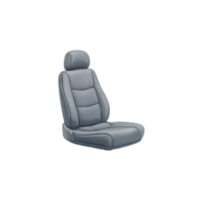
- Seat
Padded structure inside the car that supports passengers comfortably, providing proper posture, stability, and safety during travel, while often adjustable to suit different body sizes and driving positions.
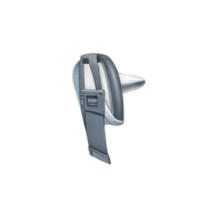
- Seatbelt
Safety strap designed to restrain occupants during sudden stops or collisions, reducing injury risk by keeping passengers securely in place while driving or riding.
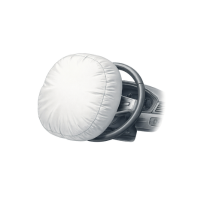
- Airbag
Inflatable safety device that deploys instantly during a collision, cushioning occupants and reducing impact force to protect the head, chest, and upper body.
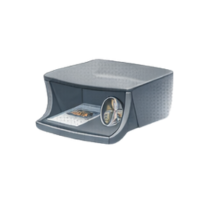
- Glove box
Small storage compartment on the dashboard used to keep documents, tools, or personal items safely organized and easily accessible inside the car.
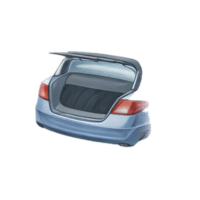
- Trunk
Rear storage area of a car designed to carry luggage, groceries, and cargo securely without affecting passenger space or comfort.
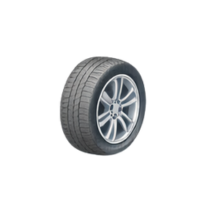
- Tire
Rubber-covered wheel component that provides grip, cushioning, and stability, allowing the car to move smoothly while maintaining traction on different road surfaces.
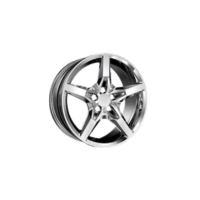
- Rim
Metal outer edge of the wheel that holds the tire in place, supporting rotation, balance, and overall wheel strength.
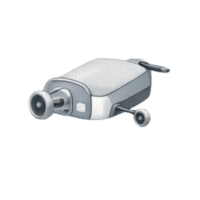
- Suspension
System of springs and linkages that absorbs road shocks, improves ride comfort, maintains tire contact, and ensures vehicle stability while driving.
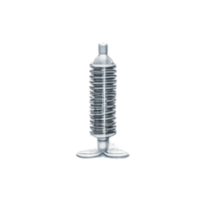
- Shock absorber
Hydraulic device that controls suspension movement by reducing vibrations and bouncing, improving comfort, handling, and tire contact with the road.
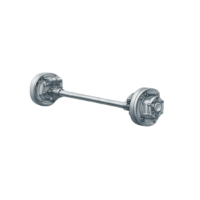
- Axle
Central shaft that connects wheels and transfers power from the engine, supporting vehicle weight and enabling smooth rotation and movement.
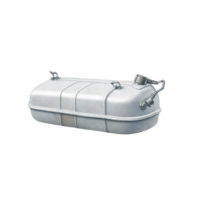
- Fuel tank
Sealed container that stores fuel safely and supplies it to the engine as needed for vehicle operation.
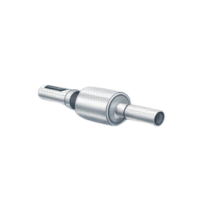
- Exhaust pipe
Tube that carries waste gases from the engine out of the vehicle, reducing noise and directing emissions away safely.
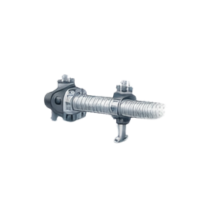
- Muffler
Part of the exhaust system that reduces engine noise by dampening sound waves produced during fuel combustion.
- Radiator
Cooling component that releases engine heat by circulating coolant, preventing overheating and ensuring efficient engine performance.

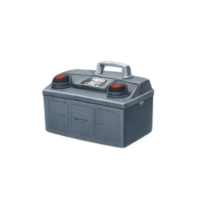
- Battery
Electrical storage unit that supplies power to start the engine and run lights, electronics, and accessories when the engine is off.
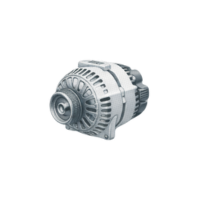
- Alternator
Device that generates electricity while the engine runs, recharging the battery and powering the car’s electrical systems.
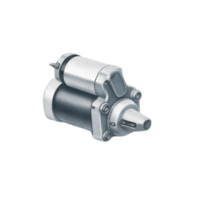
- Starter motor
Electric motor that turns the engine during ignition, allowing the combustion process to begin smoothly.
- Fuse box
Protective panel containing fuses that prevent electrical damage by cutting power when circuits overload or short.

- Horn
Sound-producing device used to alert other road users, improving communication and safety in traffic situations.
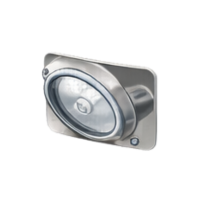
- Number plate
Official identification plate displaying a vehicle’s registration number, required by law for recognition and record purposes.

Explore Car Parts with Names and images