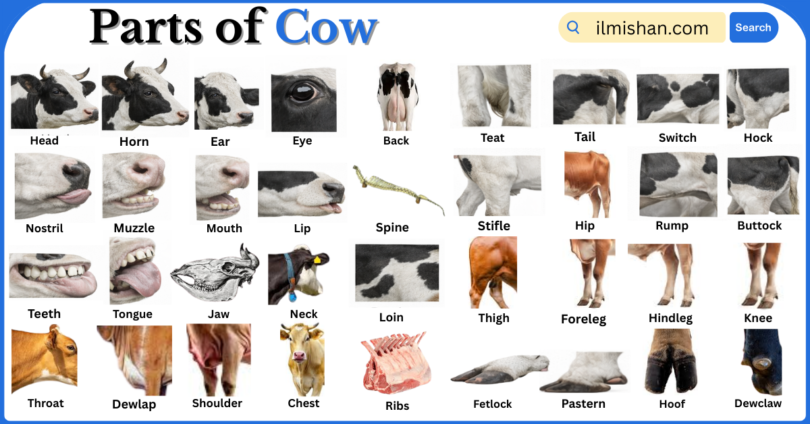

Cows are important farm animals that provide milk, meat, and other useful products for people around the world. Like all animals, a cow’s body is made up of different parts, and each part has a specific name and function. Learning the names of these body parts helps students understand animal structure while also improving their English vocabulary. In this article, you will learn Parts of Cow with Names in English with Pictures to help you easily recognize and remember each part. This simple guide is useful for kids and beginners who want to learn about farm animals and basic animal anatomy in easy and clear language.
Table of Contents
ToggleParts of Cow with Names list
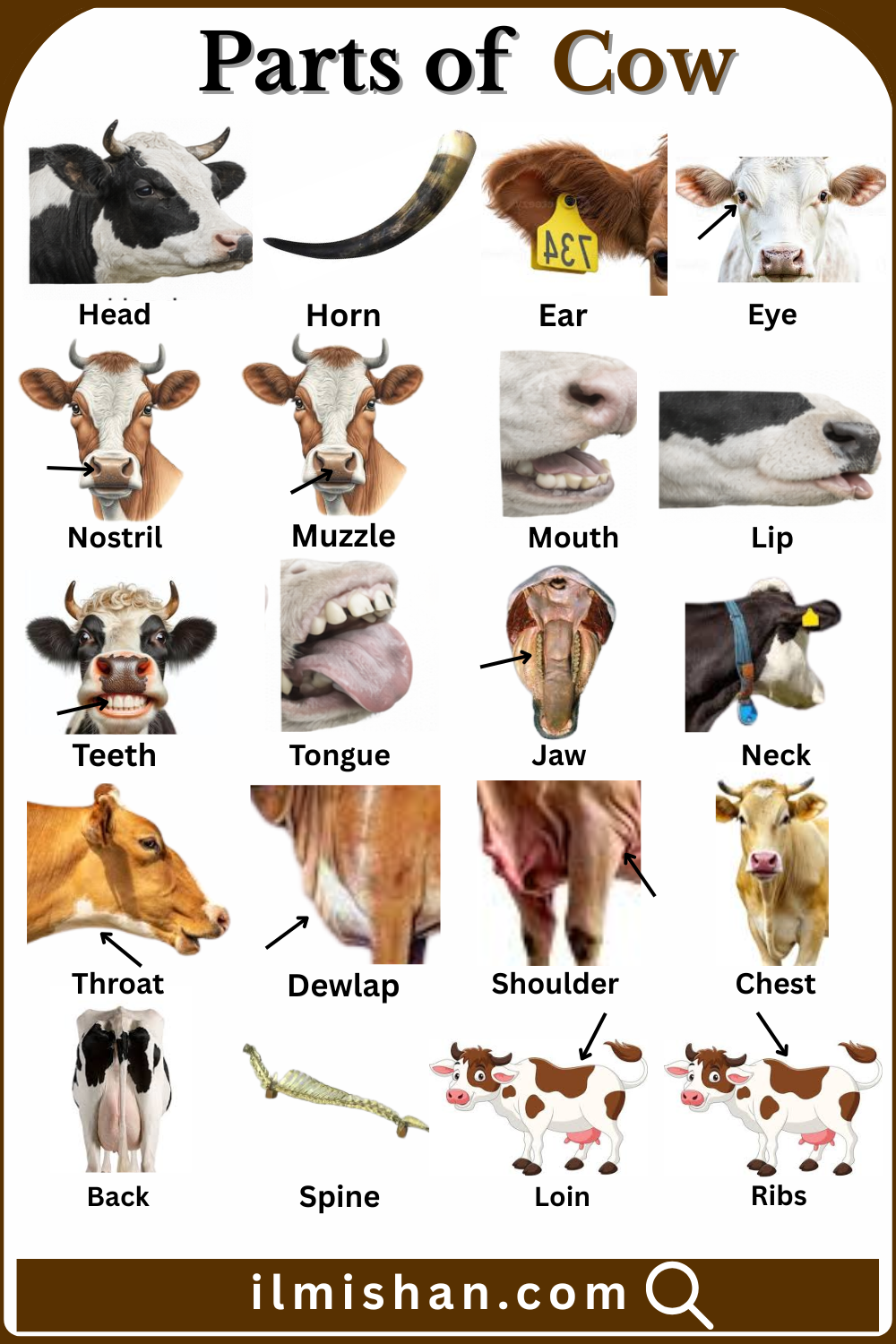
- Head
- Horn
- Ear
- Eye
- Nostril
- Muzzle
- Mouth
- Lip
- Teeth
- Tongue
- Jaw
- Neck
- Throat
- Dewlap
- Shoulder
- Chest
- Back
- Spine
- Loin
- Ribs
Cow Parts Names in English with there Pictures
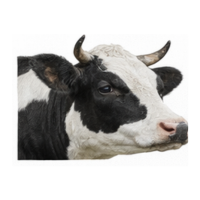
- Head
Front upper part of the cow’s body that contains the brain and main sense organs. It controls movement, behavior, feeding, breathing, and awareness of the surrounding environment.
- Horn
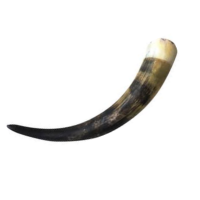
Hard, curved, pointed growth on each side of the cow’s head made of keratin covering a bony core, used mainly for defense and protection from danger.
- Ear
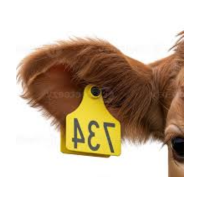
Movable external organ located on both sides of the head that detects sounds from different directions and helps the cow stay alert to nearby movement.
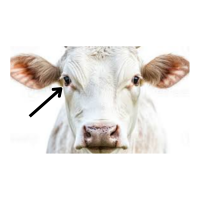
- Eye
Organ of vision positioned on the sides of the head, allowing the cow to see a wide field of view and detect light, motion, shapes, and changes around it.
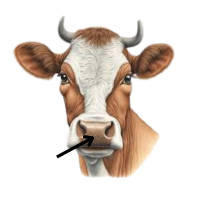
- Nostril
One of two outer openings of the nose that allow air to enter and leave the body, playing an important role in breathing and smelling.
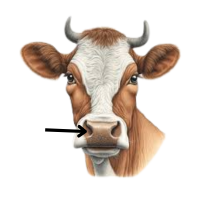
- Muzzle
Soft, moist, hairless front part of the cow’s face surrounding the nose and mouth, highly sensitive and used for smelling, touching, and selecting grass while grazing.
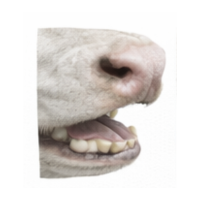
- Mouth
Opening in the lower part of the head used for eating grass, chewing cud, drinking water, and producing sounds for communication.
- Lip
Soft, flexible edges of the mouth that help grasp, pull, and hold grass or feed before chewing and swallowing.
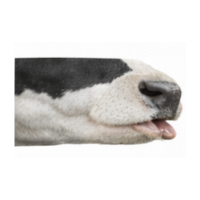
- Teeth
Hard structures inside the mouth used mainly for cutting and grinding grass; cows lack upper front teeth and instead have a tough dental pad.
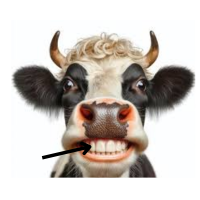
- Tongue
Strong, rough, muscular organ inside the mouth that wraps around grass to pull it in, assists in chewing, tasting, and pushing food backward for swallowing.
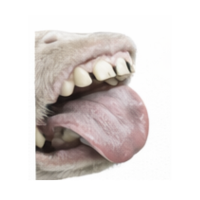
- Jaw
Strong movable bone structure that holds the teeth and moves sideways and up and down, allowing the cow to chew food thoroughly.
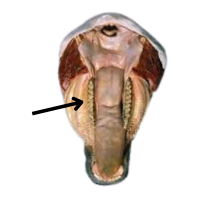
- Neck
Thick, muscular part connecting the head to the body, supporting head movement and enabling the cow to lower its head easily while grazing.
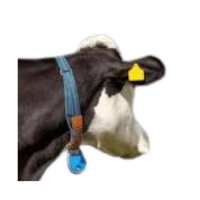
- Throat
Internal passage within the neck that carries air toward the lungs and food toward the stomach during breathing and swallowing.
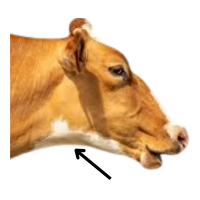
- Dewlap
Loose fold of skin hanging under the neck, especially noticeable in certain breeds, helping regulate body temperature by increasing surface area for heat loss.
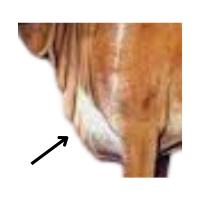
- Shoulder
Upper front body region where the forelegs attach, containing strong muscles and bones that support movement and carry much of the body’s weight.
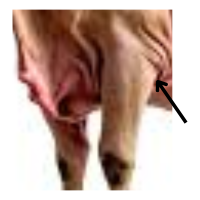
- Chest
Front lower section of the body between the shoulders that houses vital organs such as the heart and lungs, protected by the rib structure.
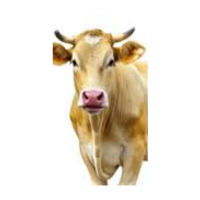
- Back
Upper surface of the body extending from the shoulders to the hips, providing structural support and connecting major muscle groups.
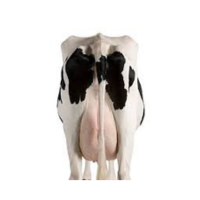
- Spine
Long column of connected vertebrae running from the head to the tail, supporting the body and protecting the spinal cord.
- Loin
Middle portion of the back located between the ribs and hips, consisting of strong muscles that support movement and body stability.
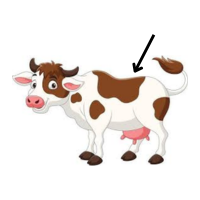
- Ribs
Series of curved bones attached to the spine, forming a protective cage around the chest organs and assisting in breathing movements.
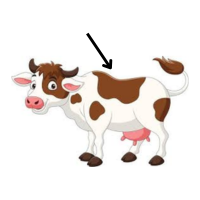
Cow Parts Names in English with there Pictures
Explore Cow parts and Name
- Flank
- Abdomen
- Belly
- Udder
- Teat
- Tail
- Switch
- Hock
- Stifle
- Hip
- Rump
- Buttock
- Thigh
- Foreleg
- Hindleg
- Knee
- Fetlock
- Pastern
- Hoof
- Dewclaw
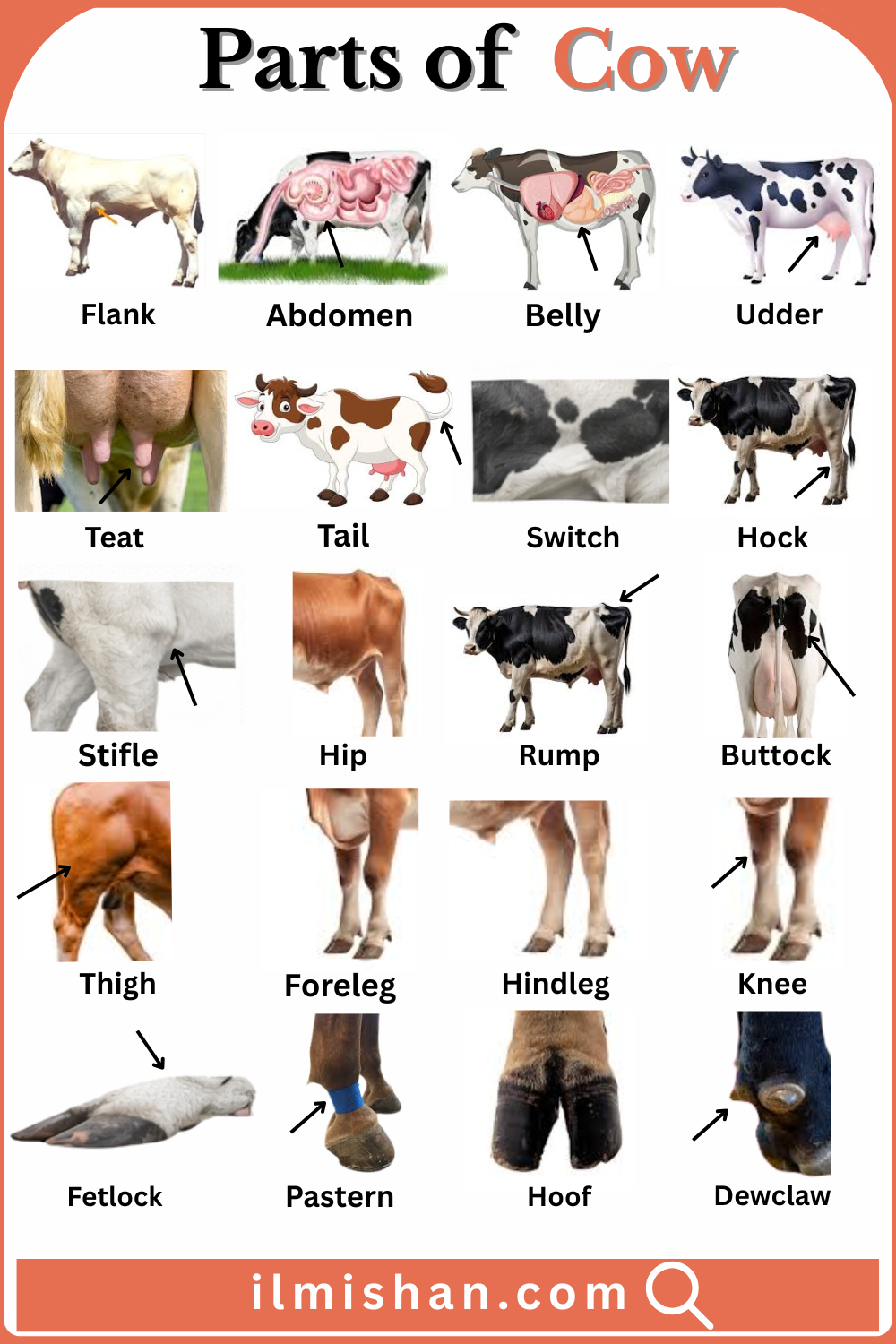
Common Parts of Cow with their Names and Pictures
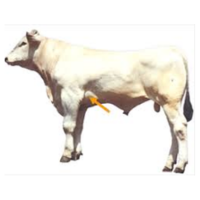
- Flank
Soft side region of the cow’s body located between the last rib and the upper part of the hind leg, often slightly hollow. It expands and contracts during breathing and reflects digestive activity inside the stomach.
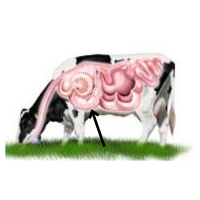
- Abdomen
Large body section behind the chest that contains the cow’s complex stomach system and intestines. It plays a central role in digestion, nutrient absorption, and overall health, appearing full after feeding.
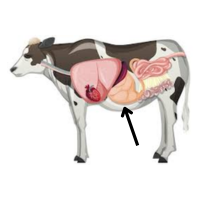
- Belly
Lower outer portion of the abdomen that hangs beneath the body and protects internal digestive organs. Its size may change depending on feeding, pregnancy, and the general physical condition of the cow.
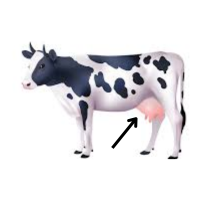
- Udder
Well-developed milk-producing organ of a female cow located between the hind legs, consisting of mammary glands that produce, store, and release milk to nourish the calf or for dairy use.
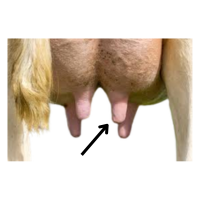
- Teat
One of four narrow cylindrical projections attached to the udder through which milk flows out. Each teat contains a canal that allows milk to pass during suckling or milking.
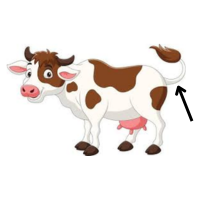
- Tail
Long flexible extension of the spine at the rear of the body, made up of small bones and muscles, mainly used to brush away flies and signal mood or movement.
- Switch
Thick tuft of long coarse hair located at the end of the tail, helping the cow effectively swat insects from its body, especially around the back and hindquarters.
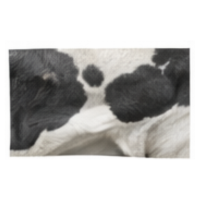
- Hock
Strong, clearly visible joint in the hind leg positioned between the lower leg and the upper section, functioning similarly to the human ankle and enabling bending during walking.
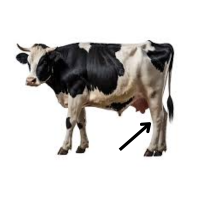
- Stifle
Large joint of the hind leg located above the hock and below the thigh, comparable to the human knee, allowing forward movement and supporting the body’s weight.
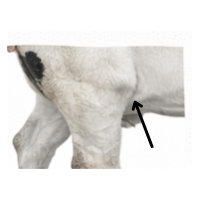
- Hip
Prominent bony area on each side of the upper hindquarters where the hind leg connects to the body, providing support, balance, and strength for movement.
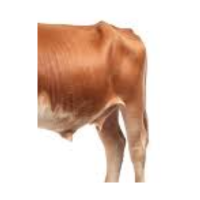
- Rump
Upper rear part of the cow’s body extending from the hips to the base of the tail, forming a broad surface that supports muscles used in walking.
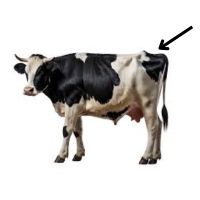
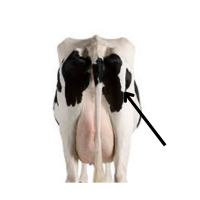
- Buttock
Lower rear fleshy portion beneath the rump composed of strong muscles that help in standing, walking, and rising from a resting position.
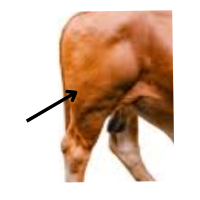
- Thigh
Upper muscular part of the hind leg located between the hip and the stifle, providing powerful support and movement during walking and running.
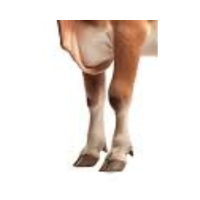
- Foreleg
Front limb extending from the shoulder down to the hoof, supporting much of the cow’s body weight and enabling steady movement and balance.
- Hindleg
Rear limb extending from the hip to the hoof, responsible for pushing the body forward and providing strength during walking or running.
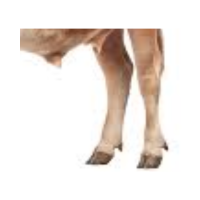
- Knee
Joint located in the middle section of the foreleg, functioning similarly to a human wrist, allowing the front leg to bend and support movement.
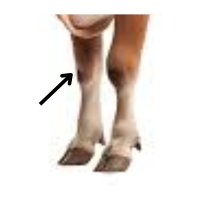
- Fetlock
Joint situated just above the hoof on both front and hind legs, acting as a flexible shock absorber that reduces impact while walking on hard ground.
- Pastern
Short sloping section of the leg between the fetlock and the hoof that cushions movement and helps absorb pressure during standing and walking.
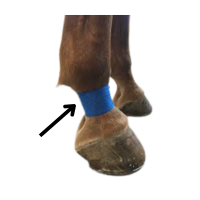
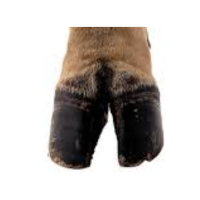
- Hoof
Hard protective outer covering at the bottom of each leg made of keratin, supporting the cow’s weight and protecting sensitive inner tissues from injury.
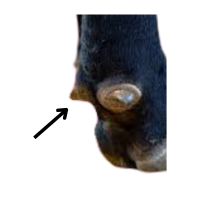
- Dewclaw
Small extra digit located slightly above and behind the hoof that usually does not touch the ground but may provide support on soft or uneven surfaces.
Common Parts of Cow with their Names and Pictures