
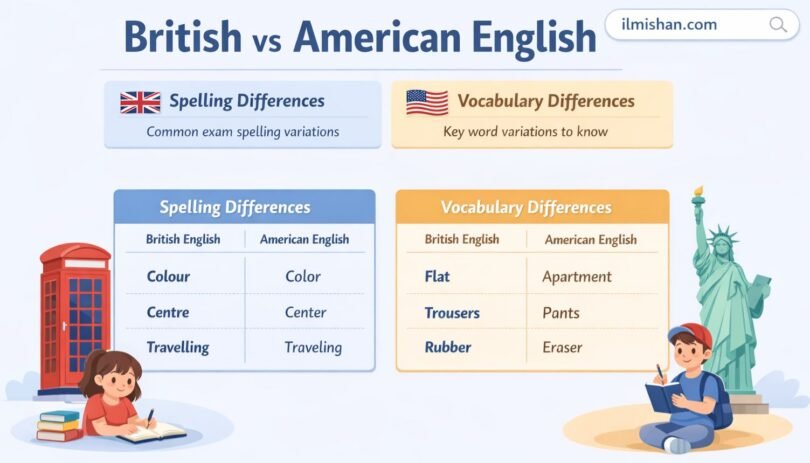

British and American English are both correct forms of the English language, but they have some differences that can be important in exams and education. These differences include spelling, vocabulary, pronunciation, and writing style. Students often get confused about which form to use in tests or school work. Understanding the difference between British vs American English in Exams and Education helps learners follow the correct rules and avoid mistakes. In this post, you will learn how both forms are used in academic settings, with simple explanations to help students write clearly and confidently in exams.
What Is British and American English in Education?
British English is commonly used in countries that follow the UK education system.
American English is used in the United States and in many global educational platforms.
👉 In exams, this means:
- Your spelling, vocabulary, grammar, and punctuation may follow one style
- Both styles are accepted in most international exams
Are Both Forms Accepted in Exams?
✔ Yes, But With One Important Rule
Most exam boards accept both forms:
- Cambridge Exams (IELTS, etc.) → Accept both
- TOEFL and US-based exams → Prefer American English
- School exams (varies by country) → Usually follow one system
👉 Golden Rule:
Do not mix British and American English in the same answer.
Key Differences That Affect Exam Writing
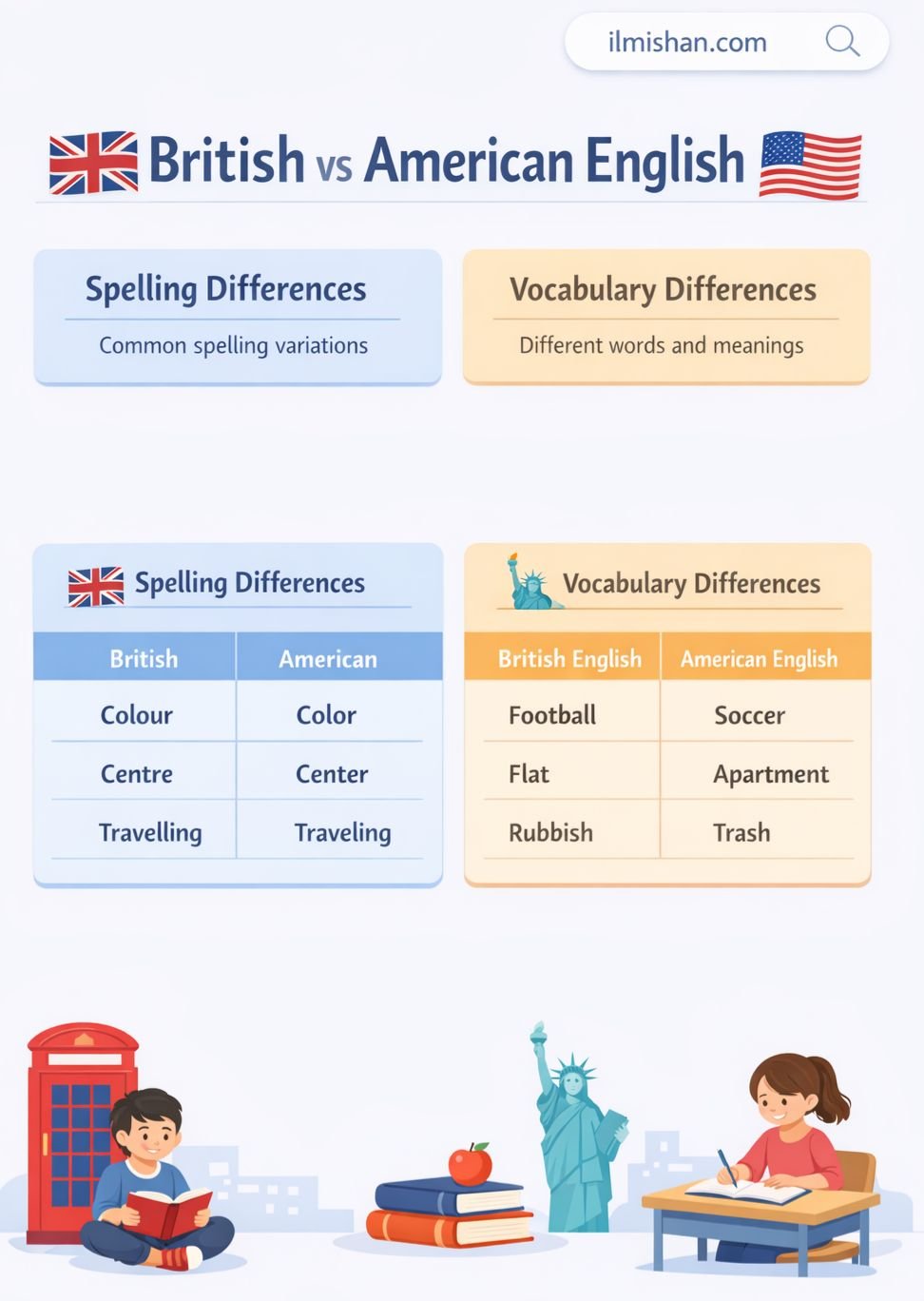
1. Spelling Differences
Spelling is the most important factor in written exams.
| British English | American English |
|---|---|
| Colour | Color |
| Favourite | Favorite |
| Centre | Center |
| Defence | Defense |
| Travelling | Traveling |
👉 Exam Tip:
If you start with colour, continue using British spelling throughout.
2. Vocabulary Differences
Word choice can also affect clarity.
| British English | American English |
|---|---|
| Flat | Apartment |
| Holiday | Vacation |
| Lift | Elevator |
| Biscuit | Cookie |
| Lorry | Truck |
👉 In Exams:
Use words that match your chosen style and are easy to understand.
What Is British and American English in Education
3. Grammar Differences
Grammar differences are small but noticeable.
a) Tense Usage
- British: I have just completed my work.
- American: I just completed my work.
👉 Both are correct, but stay consistent.
b) Collective Nouns
- British: The team are performing well.
- American: The team is performing well.
c) Prepositions
| British English | American English |
|---|---|
| At the weekend | On the weekend |
| Different to | Different from |
4. Punctuation Differences
- British English often uses single quotation marks (‘ ’)
- American English uses double quotation marks (“ ”)
👉 In exams, follow one style only.
Which English Should You Use in Exams?
✔ Follow Your Education System
| Situation | Recommended Style |
|---|---|
| UK-based exams | British English |
| US-based exams | American English |
| International exams (IELTS) | Either (stay consistent) |
✔ Check Instructions Carefully
Sometimes exam papers clearly mention:
- “Use British English”
- or “Use American English”
👉 Always follow given instructions.
How Mixing English Styles Affects Your Marks
Mixing styles can create a negative impression.
❌ Example:
- My favourite color is blue.
👉 This sentence mixes both styles:
- favourite (British)
- color (American)
✔ Correct:
- British: My favourite colour is blue.
- American: My favorite color is blue.
👉 In exams, consistency shows strong language control.
Tips for ESL Students to Score High
✔ Choose One Style Early
Pick British or American English based on your exam type.
✔ Practice Writing Daily
Write essays, paragraphs, and answers in one style.
✔ Learn Common Differences
Focus on:
- Spelling patterns
- Vocabulary pairs
- Grammar usage
✔ Use Spell Check Tools
Set your device to:
- English (UK) or
- English (US)
👉 This helps avoid spelling mistakes.
✔ Read Exam-Level Content
- British style → UK textbooks, IELTS materials
- American style → TOEFL books, US articles
Common Mistakes Students Should Avoid
- ❌ Mixing spelling styles
- ❌ Using informal American words in formal British exams
- ❌ Ignoring grammar differences
- ❌ Not following exam instructions
Practice Table for Exams
| British English | American English |
|---|---|
| I am on holiday. | I am on vacation. |
| She stood in the queue. | She stood in line. |
| The team are ready. | The team is ready. |
| He lives in a flat. | He lives in an apartment. |
| Turn on the torch. | Turn on the flashlight. |
Advanced Understanding for Higher Exams
At advanced levels (IELTS Band 7+ or academic writing):
- Examiners focus more on clarity, accuracy, and consistency
- Small differences (like learnt vs learned) are both acceptable
- Formal tone matters more than style choice
👉 Key Insight:
Your ideas and structure are more important than choosing British or American English.
Final Thoughts
Understanding British vs American English in exams and education is essential for every learner. Both forms are correct and accepted, but success depends on using one style clearly and consistently.
👉 Focus on:
- Correct spelling
- Clear vocabulary
- Proper grammar
- Consistent usage
By following these rules, you can write confidently, avoid mistakes, and achieve higher marks in any English exam.