
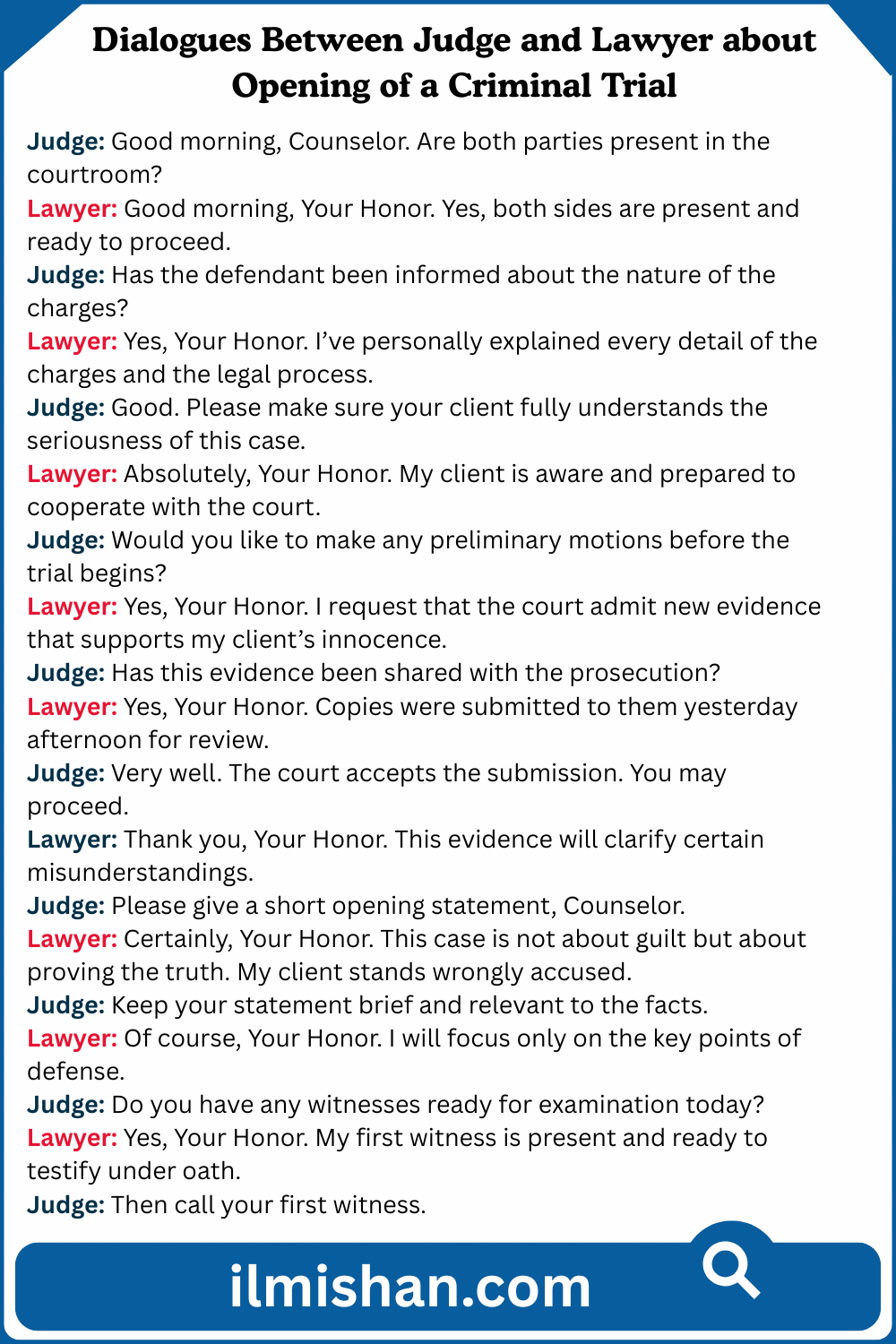
Dialogues Between Judge and Lawyer about Opening of a Criminal Trial
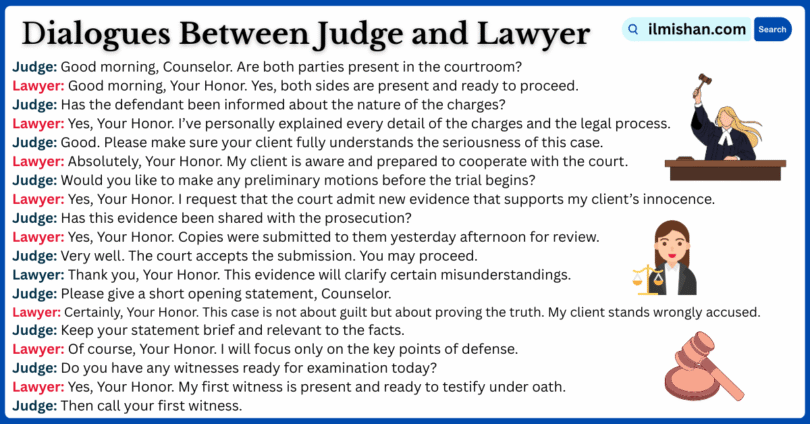
Judge: Good morning, Counselor. Are both parties present in the courtroom?
Lawyer: Good morning, Your Honor. Yes, both sides are present and ready to proceed.
Judge: Has the defendant been informed about the nature of the charges?
Lawyer: Yes, Your Honor. I’ve personally explained every detail of the charges and the legal process.
Judge: Good. Please make sure your client fully understands the seriousness of this case.
Lawyer: Absolutely, Your Honor. My client is aware and prepared to cooperate with the court.
Judge: Would you like to make any preliminary motions before the trial begins?
Lawyer: Yes, Your Honor. I request that the court admit new evidence that supports my client’s innocence.
Judge: Has this evidence been shared with the prosecution?
Lawyer: Yes, Your Honor. Copies were submitted to them yesterday afternoon for review.
Judge: Very well. The court accepts the submission. You may proceed.
Lawyer: Thank you, Your Honor. This evidence will clarify certain misunderstandings.
Judge: Please give a short opening statement, Counselor.
Lawyer: Certainly, Your Honor. This case is not about guilt but about proving the truth. My client stands wrongly accused.
Judge: Keep your statement brief and relevant to the facts.
Lawyer: Of course, Your Honor. I will focus only on the key points of defense.
Judge: Do you have any witnesses ready for examination today?
Lawyer: Yes, Your Honor. My first witness is present and ready to testify under oath.
Judge: Then call your first witness.
Lawyer: Thank you, Your Honor. I call Mr. Robert Jenkins to the stand.
Judge: Has the witness been sworn in?
Lawyer: Yes, Your Honor. The clerk administered the oath a few moments ago.
Judge: Proceed with your questions, Counselor.
Lawyer: Thank you, Your Honor. I’ll begin with questions about the evening of the incident.
Judge: Please ensure your questions are precise.
Lawyer: Certainly, Your Honor. I intend to keep everything factual.
Judge: You may continue.
Lawyer: Witness, did you personally see my client at the scene that night?
Judge: Counselor, keep your tone neutral.
Lawyer: My apologies, Your Honor. I’ll maintain a respectful manner.
Judge: That’s fine. Continue your questioning.
Lawyer: Thank you, Your Honor. Witness, please describe exactly what you saw at that moment.
Judge: We’ll pause here for a short recess.
Lawyer: Understood, Your Honor. Thank you for your consideration.
Dialogues Between Judge and Lawyer about Opening of a Criminal Trial
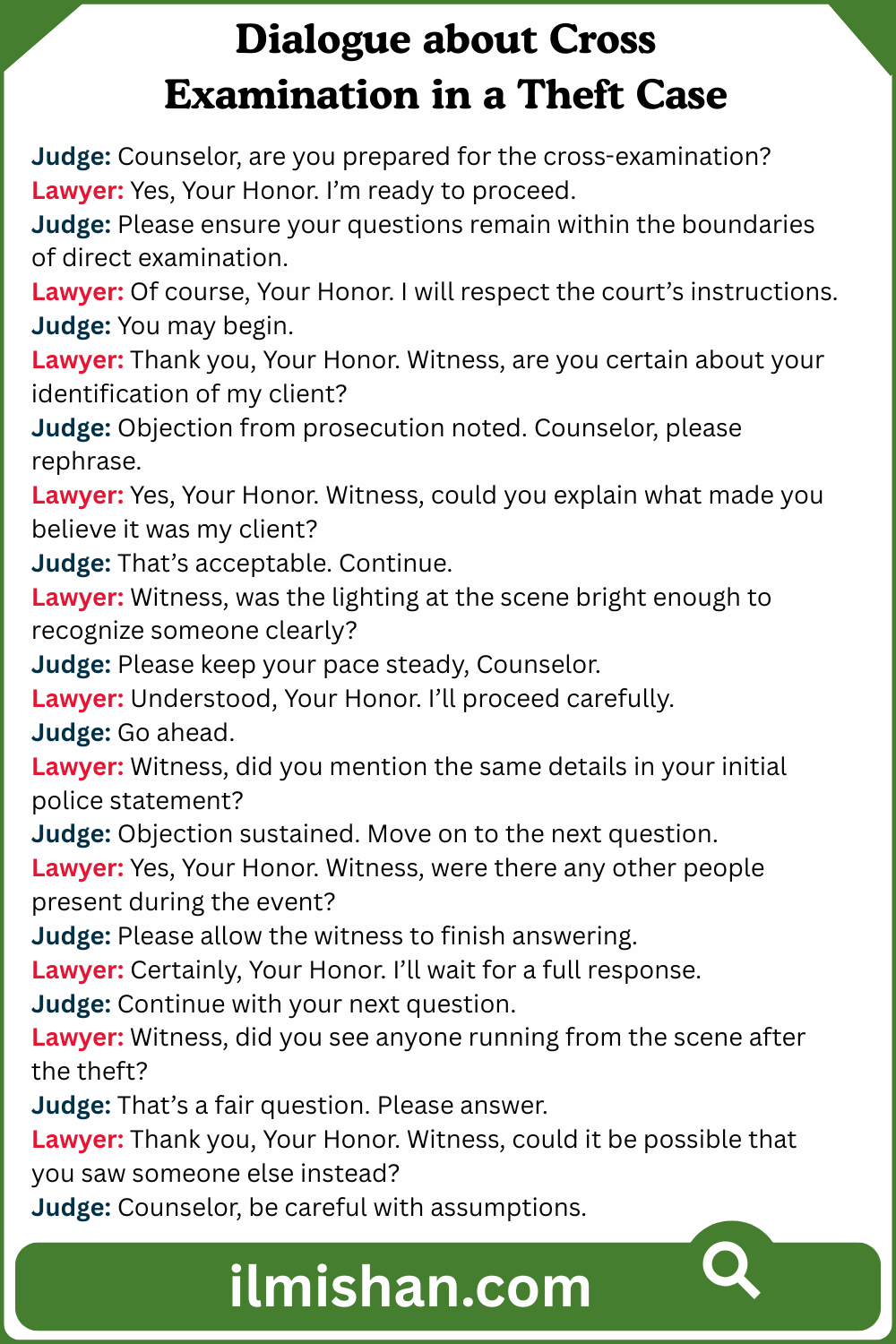
Dialogue about Cross Examination in a Theft Case
Judge: Counselor, are you prepared for the cross-examination?
Lawyer: Yes, Your Honor. I’m ready to proceed.
Judge: Please ensure your questions remain within the boundaries of direct examination.
Lawyer: Of course, Your Honor. I will respect the court’s instructions.
Judge: You may begin.
Lawyer: Thank you, Your Honor. Witness, are you certain about your identification of my client?
Judge: Objection from prosecution noted. Counselor, please rephrase.
Lawyer: Yes, Your Honor. Witness, could you explain what made you believe it was my client?
Judge: That’s acceptable. Continue.
Lawyer: Witness, was the lighting at the scene bright enough to recognize someone clearly?
Judge: Please keep your pace steady, Counselor.
Lawyer: Understood, Your Honor. I’ll proceed carefully.
Judge: Go ahead.
Lawyer: Witness, did you mention the same details in your initial police statement?
Judge: Objection sustained. Move on to the next question.
Lawyer: Yes, Your Honor. Witness, were there any other people present during the event?
Judge: Please allow the witness to finish answering.
Lawyer: Certainly, Your Honor. I’ll wait for a full response.
Judge: Continue with your next question.
Lawyer: Witness, did you see anyone running from the scene after the theft?
Judge: That’s a fair question. Please answer.
Lawyer: Thank you, Your Honor. Witness, could it be possible that you saw someone else instead?
Judge: Counselor, be careful with assumptions.
Lawyer: Of course, Your Honor. I’ll stay objective.
Judge: How much longer will you take?
Lawyer: Just a few more questions, Your Honor.
Judge: Proceed.
Lawyer: Witness, did you personally know my client before this incident?
Judge: Thank you. That’s enough for now.
Lawyer: Thank you, Your Honor. I’m done with the cross-examination.
Judge: Well done, Counselor. Please submit your written notes later.
Lawyer: I will, Your Honor. Thank you for your time.
Dialogue about Cross Examination in a Theft Case
Dialogue about Presentation of Evidence in a Murder Case
Judge: Counselor, are you now ready to present your evidence?
Lawyer: Yes, Your Honor. All evidence is organized and labeled properly for submission.
Judge: Please hand the exhibits to the clerk.
Lawyer: Certainly, Your Honor. Here are the photographs, documents, and expert reports.
Judge: Describe Exhibit A for the record.
Lawyer: Exhibit A is a forensic report proving that my client’s fingerprints were not found on the weapon.
Judge: And Exhibit B?
Lawyer: Exhibit B is a CCTV recording showing my client entering a restaurant at the time of the crime.
Judge: Has this recording been verified?
Lawyer: Yes, Your Honor. It was authenticated by an independent lab.
Judge: You may play the recording.
Lawyer: Thank you, Your Honor. The video clearly shows the timeline of events.
Judge: That seems relevant. Please continue.
Lawyer: Exhibit C includes phone records proving that my client was making calls during the incident.
Judge: Were these records obtained legally?
Lawyer: Yes, Your Honor. They were provided by the service provider under court order.
Judge: Very well. Please mark it as admitted evidence.
Lawyer: Thank you, Your Honor. These records support our defense strongly.
Judge: Do you have any witness statements attached?
Lawyer: Yes, Your Honor. Two witnesses confirm my client’s presence at another location.
Judge: That’s good. Have they been notified to appear?
Lawyer: Yes, Your Honor. They will testify tomorrow.
Judge: Excellent. Proceed with your presentation.
Lawyer: Thank you, Your Honor. All evidence aligns with the truth that my client is innocent.
Judge: You’ve presented your points well.
Lawyer: I appreciate that, Your Honor. Our goal is only to reveal the facts.
Judge: The court acknowledges the effort. You may rest your case.
Lawyer: Thank you, Your Honor. The defense rests.
Dialogue about Presentation of Evidence in a Murder Case
Dialogues Between Judge and Lawyer about Sentencing and Final Judgment
Judge: Counselor, are you ready for your final argument before sentencing?
Lawyer: Yes, Your Honor. I’ll keep it short but meaningful.
Judge: Proceed.
Lawyer: Your Honor, throughout this trial, we’ve shown that the evidence fails to link my client to the offense.
Judge: Continue.
Lawyer: The prosecution’s case is built on assumptions rather than facts. Justice must rely on truth, not suspicion.
Judge: What outcome do you seek?
Lawyer: Your Honor, I request full acquittal or, at the very least, a reduced sentence for my client’s cooperation.
Judge: Has your client accepted responsibility for any actions?
Lawyer: Yes, Your Honor. My client has expressed deep regret for the situation, even if not guilty of the act itself.
Judge: That’s noted. Please continue.
Lawyer: Your Honor, my client has no prior criminal record and has served society with integrity.
Judge: Do you have any statements from the family?
Lawyer: Yes, Your Honor. The family has submitted a letter expressing full faith in the justice system.
Judge: The court appreciates that.
Lawyer: Thank you, Your Honor. My client seeks not sympathy, but fairness.
Judge: The court will now announce its decision.
Lawyer: We await your decision with full respect, Your Honor.
Judge: After careful review, the court finds the defendant not guilty due to insufficient evidence.
Lawyer: Thank you, Your Honor. Justice has truly been served today.
Judge: Please remind your client to act responsibly hereafter.
Lawyer: Absolutely, Your Honor. My client will continue to respect the law.
Judge: The court commends both counsels for their professionalism.
Lawyer: We appreciate that, Your Honor. It was an honor to serve this court.
Judge: This session is adjourned.
Lawyer: Thank you, Your Honor.
Dialogues Between Judge and Lawyer about Sentencing and Final Judgment
Dialogues about Civil Dispute Settlement Hearing Between Judge and Lawyer
Judge: Counselor, what’s the nature of the dispute before the court today?
Lawyer: Your Honor, it’s a property boundary issue between two families living on adjoining plots.
Judge: Have both parties filed their documents?
Lawyer: Yes, Your Honor. Both sides have provided land deeds and ownership certificates.
Judge: Were there any previous attempts at settlement?
Lawyer: Yes, Your Honor. We tried mediation, but no mutual agreement was reached.
Judge: Very well. Present your client’s claim.
Lawyer: My client owns the land legally. The other party has extended their fence beyond the agreed line.
Judge: Do you have evidence supporting this claim?
Lawyer: Yes, Your Honor. A licensed surveyor’s report confirms the encroachment.
Judge: Has this report been verified?
Lawyer: Yes, Your Honor. It’s duly signed and stamped.
Judge: Please call your expert witness.
Lawyer: Thank you, Your Honor. I call Mr. Samuel, the land surveyor.
Judge: Has he taken the oath?
Lawyer: Yes, Your Honor. He’s ready to testify.
Judge: Proceed.
Lawyer: Mr. Samuel, can you confirm that you surveyed both properties personally?
Judge: Let the witness answer fully.
Lawyer: Of course, Your Honor. I’ll allow him to explain the measurements clearly.
Judge: Continue your questioning.
Lawyer: Mr. Samuel, what did you discover about the disputed area?
Judge: That’s an important point.
Lawyer: Yes, Your Honor. The survey clearly shows that the neighbor’s fence crosses my client’s boundary.
Judge: Has the opposing counsel raised any objection?
Lawyer: No, Your Honor. They have accepted the findings but request leniency.
Judge: Is your client open to compromise?
Lawyer: Yes, Your Honor. My client is willing to allow a settlement if proper compensation is offered.
Judge: That’s reasonable. I’ll encourage both parties to agree to a fair solution.
Lawyer: Thank you, Your Honor. My client values peace over prolonged disputes.
Judge: The court will schedule a mediation session next week.
Lawyer: That would be appreciated, Your Honor. Thank you for your guidance.
Judge: You’ve handled the case professionally.
Lawyer: I’m grateful, Your Honor. My goal is always fairness for both sides.
Judge: Court is adjourned for the day.
Lawyer: Thank you, Your Honor.
Dialogues about Civil Dispute Settlement Hearing Between Judge and Lawyer
Learn more helpful articles