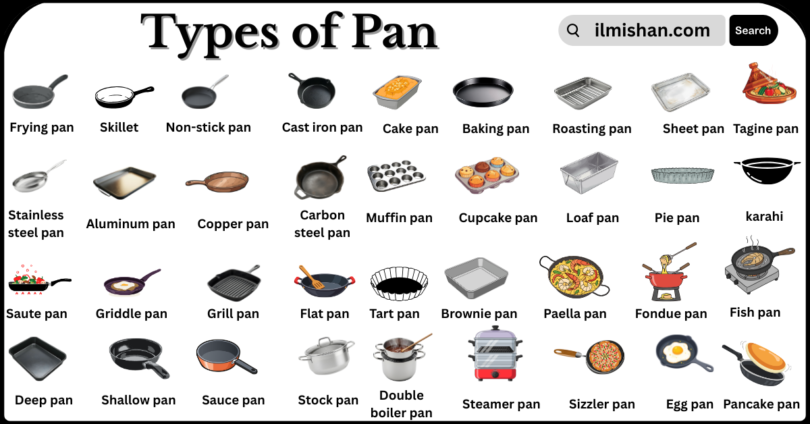

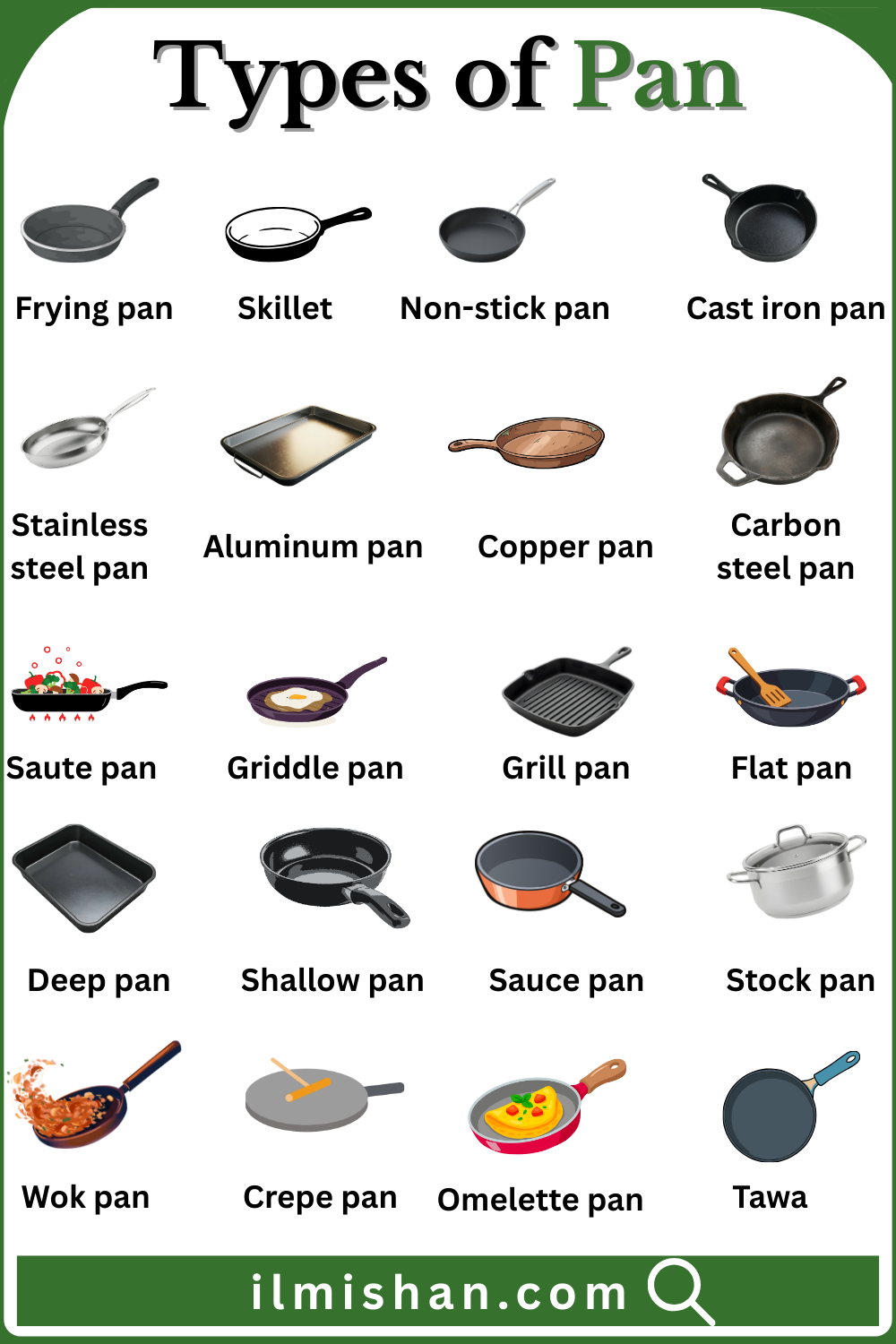
List of Pans with Name
- Frying pan
- Skillet
- Non-stick pan
- Cast iron pan
- Stainless steel pan
- Aluminum pan
- Copper pan
- Carbon steel pan
- Saute pan
- Griddle pan
- Grill pan
- Flat pan
- Deep pan
- Shallow pan
- Sauce pan
- Stock pan
- Wok pan
- Crepe pan
- Omelette pan
- Tawa
Types of Pan with Names in English and Pictures
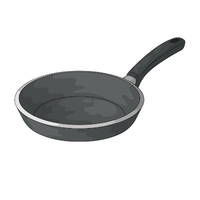
- Frying pan
A flat, wide pan with low sides, used for frying, searing, and browning foods, allowing quick heat transfer and easy turning during cooking.
- Skillet
A versatile shallow pan with slanted sides, commonly used for frying, sautéing, and baking, offering even heating and easy food movement.
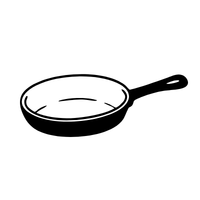
- Non-stick pan
A pan coated with non-stick material, preventing food from sticking, requiring less oil, and making cooking and cleaning easier.
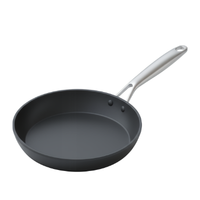
- Cast iron pan
Heavy pan made from cast iron, excellent at retaining heat, ideal for searing, frying, and oven cooking, requiring seasoning for maintenance.
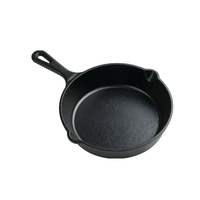
- Stainless steel pan
Durable pan made from stainless steel, resistant to rust, suitable for browning and sautéing, offering precise temperature control and professional cooking results.
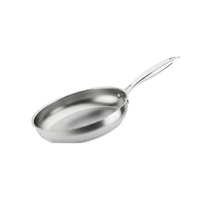
- Aluminum pan
Lightweight pan with excellent heat conductivity, heats quickly, commonly used for everyday cooking, often coated to improve durability and non-stick performance.
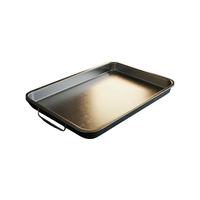
- Copper pan
High-end pan made from copper, providing superior heat control and quick temperature response, often lined with another metal for safe cooking.
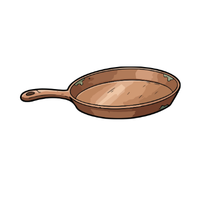
- Carbon steel pan
Pan made from carbon steel, lighter than cast iron, heats quickly, develops natural non-stick surface with use, ideal for high-heat cooking.
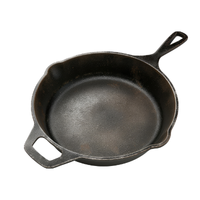
- Saute pan
Wide pan with straight sides and lid, designed for sautéing, braising, and shallow frying, holding liquids better than traditional frying pans.
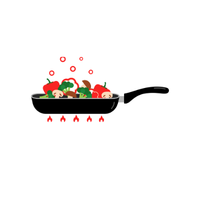
- Griddle pan
Flat or ridged pan used for cooking pancakes, meats, and vegetables, providing even surface or grill marks depending on design.
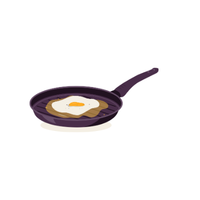
- Grill pan
Ridged pan that mimics outdoor grilling, allowing fats to drain away while creating grill marks on meats and vegetables.
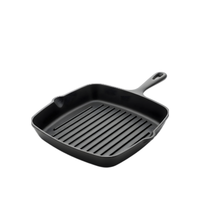
- Flat pan
Pan with completely flat cooking surface, used for evenly cooking foods like flatbreads, eggs, and pancakes.
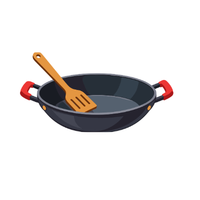
- Deep pan
Pan with higher sides, suitable for frying, simmering, and cooking dishes with sauces, preventing spills during cooking.
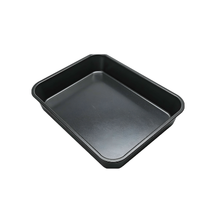
- Shallow pan
Pan with low sides, ideal for quick frying and browning, allowing moisture to escape easily and food to cook evenly.
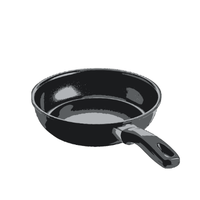
- Sauce pan
Small to medium pan with straight sides and handle, used for making sauces, boiling liquids, and reheating foods.
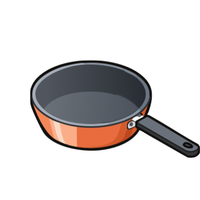
- Stock pan
Large deep pan designed for preparing stocks, soups, and large quantities of liquid-based dishes, often used in professional kitchens.
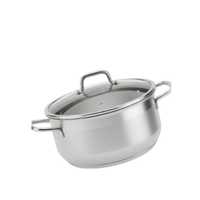
- Wok pan
Round-bottomed or flat-bottomed pan used in Asian cooking, ideal for stir-frying, steaming, and deep frying with high heat.
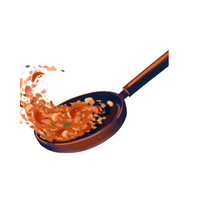
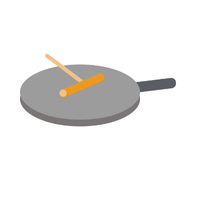
- Crepe pan
Very shallow pan with flat surface, designed for making thin crepes, pancakes, and delicate flat foods evenly.
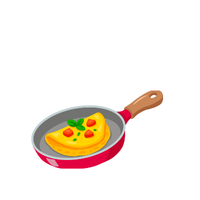
- Omelette pan
Small non-stick pan with sloped sides, designed for cooking omelettes smoothly and folding eggs easily.
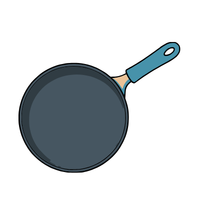
- Tawa
Traditional flat pan widely used in South Asian cooking, ideal for making flatbreads like roti, paratha, and dosa.
Types of Pan with Names in English and Pictures
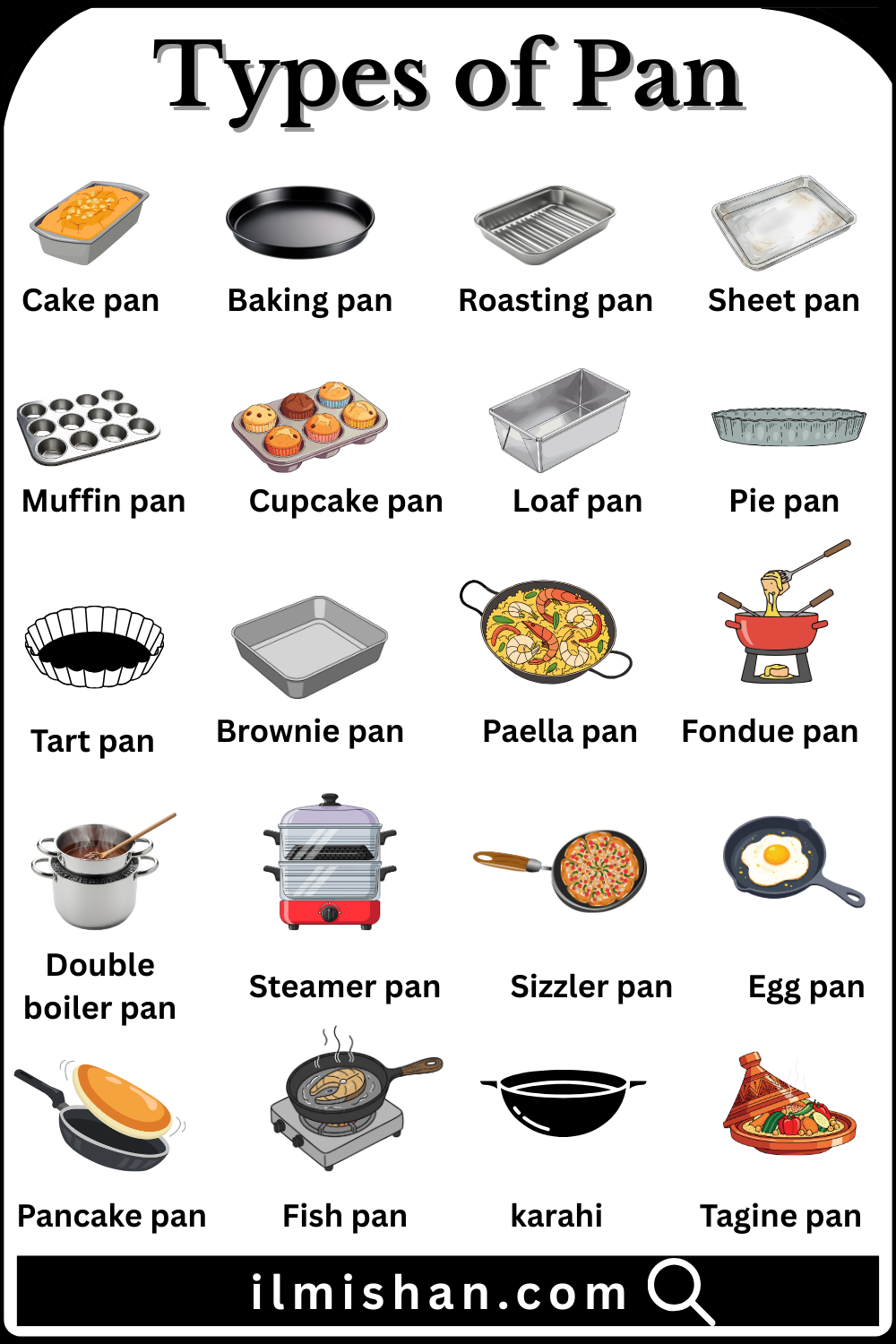
Common Types of Pan Name
- Cake pan
- Baking pan
- Roasting pan
- Sheet pan
- Muffin pan
- Cupcake pan
- Loaf pan
- Pie pan
- Tart pan
- Brownie pan
- Paella pan
- Fondue pan
- Double boiler pan
- Steamer pan
- Sizzler pan
- Egg pan
- Pancake pan
- Fish pan
- karahi
- Tagine pan
Different Types of Pan with Names in English with Pictures
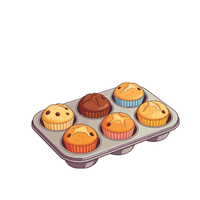
- Cake pan
A pan designed for baking cakes, available in various shapes and sizes, providing even heat distribution to help cakes rise properly and bake evenly.
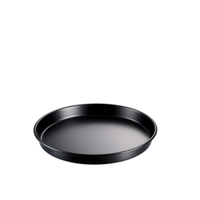
- Baking pan
General-purpose pan used in ovens for baking foods like cakes, casseroles, and desserts, made from metal or glass to withstand high temperatures.
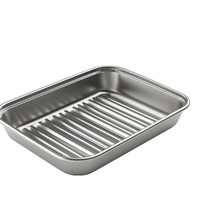
- Roasting pan
Large, deep pan used for roasting meats and vegetables in ovens, often with handles and rack to allow fat to drip away.
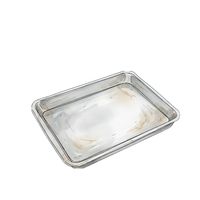
- Sheet pan
Flat rectangular pan with raised edges, used for baking cookies, roasting vegetables, and cooking large quantities of food evenly.
- Muffin pan
Pan with multiple round cups, designed to bake muffins or cupcakes in uniform shapes and sizes.
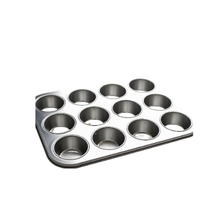
- Cupcake pan
Similar to a muffin pan, designed specifically for baking cupcakes, allowing consistent portioning and even baking.
- Loaf pan
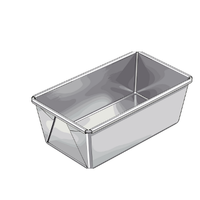
Rectangular pan used for baking bread, cakes, and meatloaf, helping hold shape and ensure even cooking.
- Pie pan
Round, shallow pan with slanted sides, designed for baking pies, holding crust and fillings securely during baking.
- Tart pan
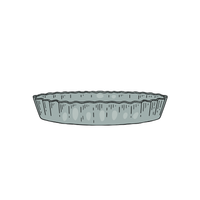
Shallow pan with straight sides, often with removable bottom, used for baking tarts and quiches with neat edges.
- Brownie pan
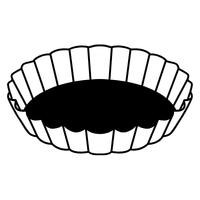
Square or rectangular pan designed for baking brownies, providing even thickness and uniform baking.
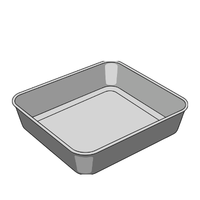
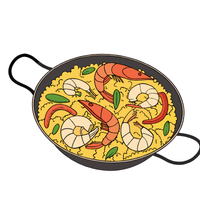
- Paella pan
Wide, shallow pan with handles, traditionally used to cook paella, allowing rice to cook evenly and form a flavorful bottom layer.
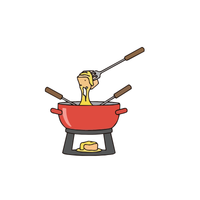
- Fondue pan
Heat-resistant pot used for melting cheese or chocolate, or heating oil, kept warm over a flame for communal dipping.
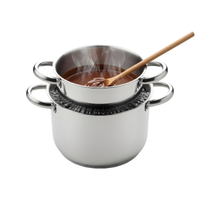
- Double boiler pan
Two-part pan system using indirect heat, ideal for melting chocolate or cooking delicate sauces without burning.
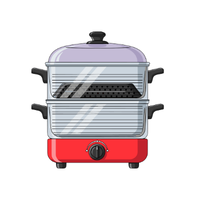
- Steamer pan
Pan designed to cook food using steam, preserving nutrients and moisture, often used for vegetables and seafood.
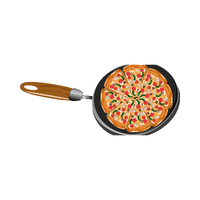
- Sizzler pan
Heavy pan that retains heat, used to serve food sizzling hot, commonly in restaurants for dramatic presentation.
- Egg pan
Small pan with shallow sides, designed for frying or cooking eggs evenly with minimal oil.

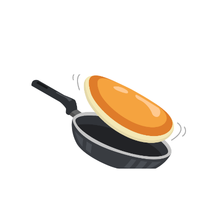
- Pancake pan
Flat or lightly rimmed pan designed for cooking pancakes, crepes, and similar batter-based foods evenly.
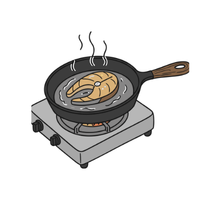
- Fish pan
Long, oval pan designed to cook whole fish, allowing even heat and preserving shape during cooking.
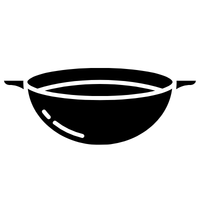
- Karahi
Deep, round-bottomed metal pan used in South Asian cooking, ideal for frying and curries, designed for high heat and quick cooking.
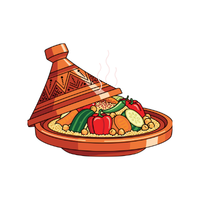
- Tagine pan
Traditional North African cooking vessel with shallow base and conical lid, allowing slow cooking and moisture circulation for flavorful stews.
Different Types of Pan with Names in English with Pictures
Learn more helpful articles